
ELEVATOR COMPANIES

Elevator service software built around maintenance contracts

Elevator work is contracted maintenance punctuated by callouts you cannot refuse. The revenue is in the route; the risk is in the paperwork per unit. Zevonix Business Suite tracks each unit you maintain, the visits due against it, the parts fitted and the contract billing behind it.

CONTRACTS AND CALLOUTS

What makes elevator service hard to administer

One portfolio of units, two very different kinds of work against it.

Scheduled visits slip quietly

A month of missed maintenance is invisible until a renewal conversation or an inspection makes it visible.

History lives per building, not per unit

Two lifts in one building have different ages, parts and faults, and notes filed by address lose that distinction.

Callouts wreck the route

An entrapment outranks the planned day, and the visits it displaced need rescheduling nobody is tracking.

Contract and extra work blur

What the contract covers and what should be billed separately gets decided informally and under-invoiced.

ONE PLATFORM, NOT SIX TOOLS

How Zevonix Business Suite runs an elevator company

The unit is the record everything else attaches to.

Customer Equipment

Every unit tracked individually with its own history, per site.

Work Orders

Planned maintenance and callouts as separate records against the same unit.

Dispatch Board

Reassign for a callout and see which planned visits were displaced.

Stock and Purchase Orders

Parts tracked to the unit they were fitted to, and reordered deliberately.

Service Contracts and Invoices

Recurring agreements carry their own billing schedule — weekly, monthly or quarterly — with renewal and suspension states, and invoices generated straight from the contract.

Reports and Analytics

Visit compliance and cost per contract from live records.

END TO END

A maintenance month, end to end

  1. 1. The portfolio is set up
    Accounts, sites and each individual unit under contract.
  2. 2. Planned visits are scheduled
    Assigned by route, so the month is deliberate rather than reactive.
  3. 3. A callout interrupts
    Dispatch reassigns and the displaced visits stay visible for rescheduling.
  4. 4. Work is recorded per unit
    Findings and parts attach to that specific unit, not the building.
  5. 5. The contract bills on schedule
    Invoices generate from the service contract on its billing schedule, with extras billed against the visit that earned them.
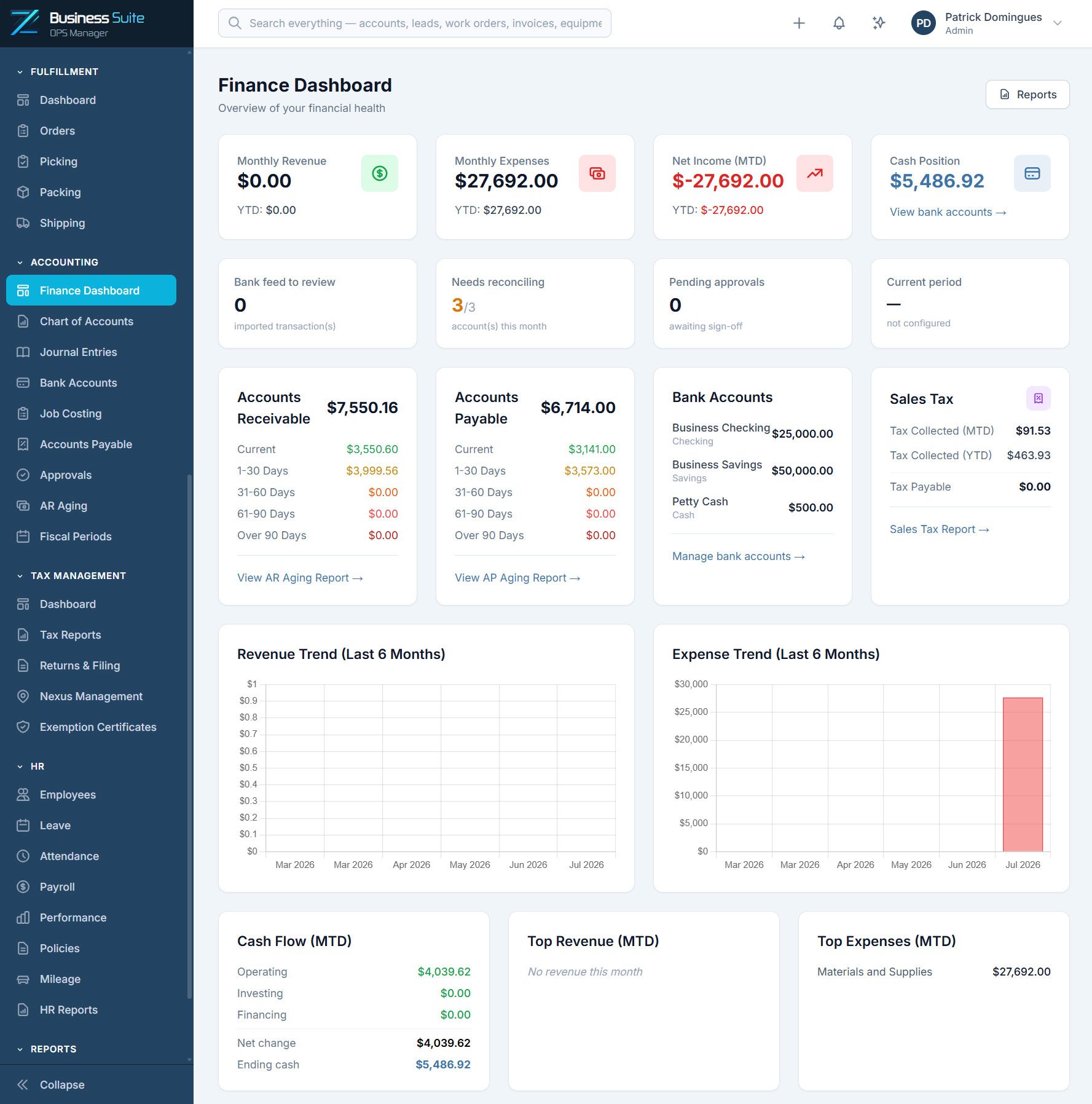
Zevonix Business Suite Finance Dashboard
WORKS WITH YOUR STACK

Fits the tools your office already runs

Accounting sync and card payments without changing your bank.

QuickBooks Online

Two-way sync so the books stay the books.

Stripe

Card and ACH payments against your invoices.

Microsoft 365

Single sign-on, mail and calendar.

Slack

Job and approval alerts where the crew already talks.

SIMPLE PRICING

One platform. Everything included.

No feature restrictions, hidden modules, or forced upgrades. Choose the plan that best fits your team size and growth needs.

Starter

Ideal for small agile teams
(1–5 users)

$249

/month

50 GB included storage

Growth

Ideal for growing businesses
(6–15 users)

$549

/month

150 GB included storage

Scale

Ideal for larger operations
(16–30 users)

$849

/month

300 GB included storage

Enterprise

Custom solutions for larger organizations

Contact Us

Custom storage allocation

Optional ADD-ONS

Choose the extra resources you need.

Sandbox Environment

$79/month

+50 GB Storage

$10/month

+100 GB Storage

$20/month

+250 GB Storage

$50/month

Every Zevonix Business Suite customer receives a dedicated isolated environment designed for performance, security, and growth.

COMMON QUESTIONS

Elevator service software questions

Yes. Customer Equipment records units individually against a site, so two lifts at one address keep separate histories, parts and visit records.
It holds the work, the unit history and the documents you attach to them, which is the substrate compliance reporting draws on. It is not a certified compliance product, so if inspection filing is central for you, confirm the fit during the trial rather than assume it.
Both are work orders against the same unit but tracked separately, so planned compliance and reactive volume stay distinguishable. The contract side sits in Service Contracts, which bills on its own schedule and tracks renewals, while chargeable callouts are billed against the job that generated them.
Starter $249/month for 1–5 users, Growth $549 for 6–15, Scale $849 for 16–30, all modules included.

Load a real contract portfolio

Seven days, the whole platform, no credit card. Load your real jobs and see whether it holds up before you commit.

GET STARTED

Start your 7-day free trial.

Start your free 7-day trial. No credit card required. We’ll email you a secure login link so you can quickly access the public demo environment and discover how Zevonix Business Suite can simplify your small business operations.